Soda, Sponge, Dry Ice or Glass Bead: Matching the Blasting Method to the Surface
Blasting is a family of processes, and the right one depends on what you're removing and what has to survive underneath.
October 14, 2026 · 4 min read
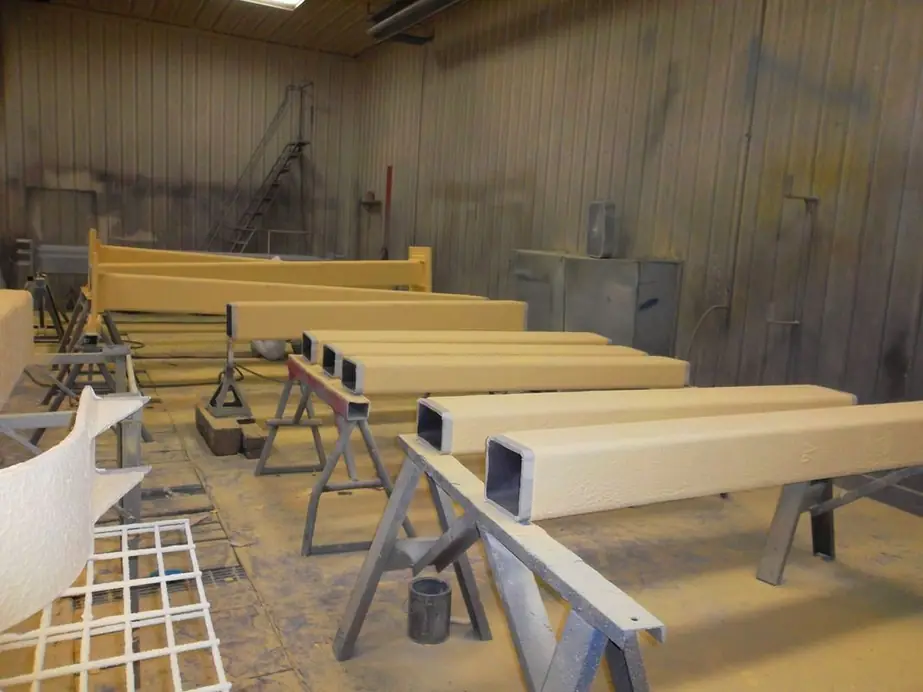
Blasting isn't one process. It's a family of them, and the right one depends on what you're removing and what has to come through the job intact. Spies Painting offers vapor, sponge, soda, dry ice, walnut shell and corn cob, and glass bead blasting for stainless steel, along with power washing, and the shop has the equipment to remove almost any coating and prepare the surface properly for whatever goes on next. Choosing the method is the first real decision on a job, so here's how to think about it.
Start with two questions
What are you taking off, and what are you protecting? Heavy rust and thick old coatings on structural steel call for something different than a greasy housing, a thin aluminum panel or a stainless part. A harder, sharper medium cuts faster and leaves a rougher surface. A softer medium cleans more gently and leaves the base material closer to how you handed it over.
The second question is where the work happens. Some items can travel to the shop, and Spies Painting offers pick-up and delivery for that. Others can't move, like a fixed tank or the steel frame of a building. The shop provides both in-shop and on-site blasting, so the method can follow the job instead of the other way around.
Soda blasting: gentle, but still effective
Soda blasting uses a baking-soda-based medium that's far softer than traditional abrasives. It's popular for taking paint, grease and light corrosion off surfaces that harsher blasting would damage, such as thin sheet metal, aluminum or parts with fine detail. The medium dissolves in water, so it rinses away, though any residue has to be washed off before a new coating goes on.
The caveat is that soda isn't the quickest route through a thick, well-bonded coating or deep rust. It's a finesse tool, best for cleaning and careful stripping rather than heavy demolition.
Sponge blasting: controlled and low on dust
Sponge blasting uses foam pieces that carry abrasive. The sponge cushions the impact, which usually means less dust and a more controlled cut than loose abrasive alone. That makes it worth a look when dust is a concern, as in a building people are still using, or when you want a coating gone without chewing into the surface beneath.
Dry ice blasting: nothing left to sweep up
Dry ice blasting fires pellets of solid carbon dioxide. The pellets turn to gas on impact, so there's no blasting medium left on the floor, only whatever was removed. That's attractive for cleaning machinery and other equipment where water and grit would be trouble. It's good on residues, grease and loose coatings. It's generally not the pick for thick, tightly bonded paint.
Walnut shell and corn cob: the soft organic options
Crushed walnut shell and corn cob are soft natural media. They clean, polish and lift light coatings and grime without scarring softer substrates the way a hard abrasive would. When the surface underneath matters more than speed, this is the family of media to ask about.
Glass bead: the stainless steel finish
Glass bead blasting leaves a smooth, even, satin finish, and Spies Painting lists it specifically for stainless steel. There's a reason for that pairing. Stainless resists corrosion partly because its surface is clean, and the usual worry is contaminating it with iron from the wrong abrasive. Glass is the typical choice because it doesn't leave that problem behind, and it gives a uniform look besides.
Vapor blasting and power washing
Vapor, or wet, blasting mixes medium with water, which holds dust down and tends to leave a clean, even surface. Power washing sits at the other end of the scale, and it's where many jobs begin. Washing off dirt, chalking and loose material before anything else happens makes every later step easier.
A quick starting guide
These are general starting points, not a substitute for someone looking at your actual surface:
- Thick old coatings and heavy rust on structural steel: ask about the more aggressive options.
- Thin metal, aluminum or fine detail: soda or sponge.
- Machinery where water and grit are a problem: dry ice.
- Softer substrates and gentle cleaning: walnut shell or corn cob.
- Stainless steel: glass bead.
- Dust control: sponge or vapor.
- Dirt, chalking and loose material before any coating: power washing.
Blasting is half the job
Removing the old coating is only the first step. How clean the surface is, what texture it ends up with and how soon the new coating follows all affect how long the paint holds. That's why it helps to have blasting and painting under one roof: the person who strips the surface knows exactly what the next coat needs from it.
Spies Painting is a family-owned shop in Fond du Lac, in business since 1933. Call (920) 921-7107 for a FREE estimate, and bring the part, the photo or the problem.
Spies Painting Inc., (920) 921-7107
Call (920) 921-7107More articles
Solid Color, Quartz, Chip and Flake or Multicolor: Choosing an Epoxy Floor Finish
Four epoxy finishes look and behave very differently underfoot, and the right one depends on what crosses the floor every day.
Why Paint Fails on Steel and Equipment, and What Shop Prep Changes
Most coating failures on steel and equipment are decided before the first coat goes on.