Why Paint Fails on Steel and Equipment, and What Shop Prep Changes
Most coating failures on steel and equipment are decided before the first coat goes on.
October 14, 2026 · 3 min read
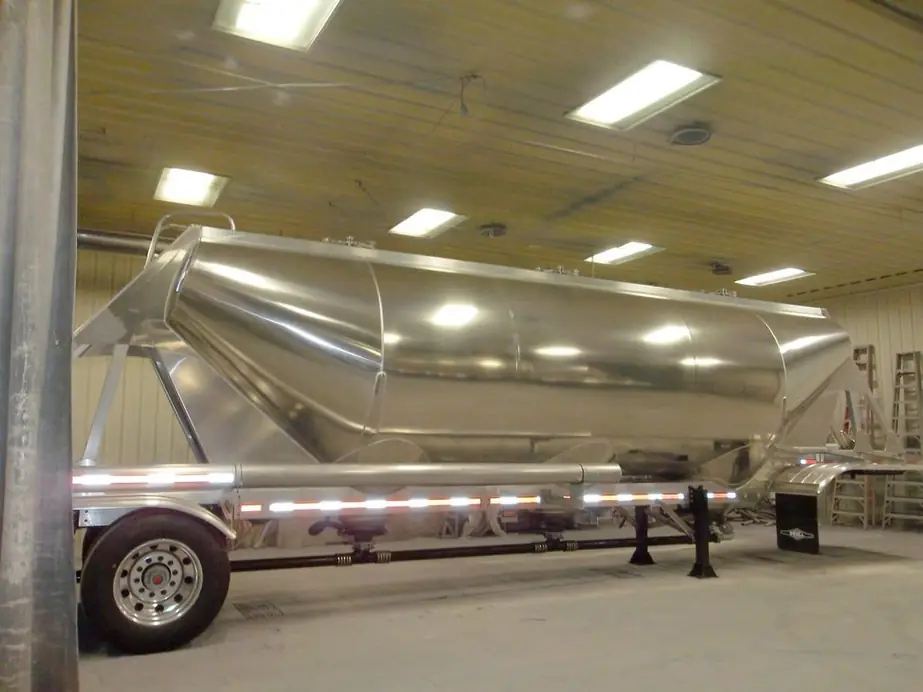
A trailer comes back from the paint shop looking great, and two seasons later it's flaking at the edges with rust blooming underneath. The owner blames the paint. More often the paint was fine and the surface it was applied to was the problem. Coatings on steel and equipment fail in a handful of predictable ways, and almost all of them trace back to what happened before the first coat.
How coatings on steel actually fail
Peeling usually means the coating never bonded well. Oil, grease, loose rust, old failing paint or a surface that's too smooth for the new coat to grip can all cause it. Rust creep starts at a chip, a weld, a sharp edge or a bolt head, then travels under the film where you can't see it until the paint lifts. Blistering often points to contamination or moisture trapped under the coating. Fading and chalking are the sun slowly wearing down the surface layer.
Notice the pattern. Only the last of those is about the paint product itself. The rest are about cleaning, removing, profiling and protecting the steel before and while the coating goes on.
Why edges and welds get attention
Paint tends to pull thin at sharp edges, corners and welds, and those are exactly where steel is most exposed to knocks and weather. Equipment is full of them. A careful painter works those spots deliberately instead of trusting a single pass to cover them, because that's where a failure begins and then spreads.
What a shop changes
Spies Painting's in-house shop is set up to prepare and paint just about anything mobile: structural steel, trailers, machinery, small parts, construction equipment, playground equipment, boat bottoms and more. No job is too big or too small, according to the shop, and pick-up and delivery is available so the work doesn't depend on you having a way to move it.
Working in a shop matters for several reasons. The piece can be positioned so every surface is reachable, including undersides and awkward corners. Blasting and painting happen in the same place, so a freshly cleaned surface doesn't sit around collecting dust, moisture or fingerprints. And indoor conditions are steadier than a lot in April or a driveway in November, which gives a coating a better start.
Different equipment, different demands
Trailers and machinery take vibration, road grit, salt and constant handling, so they need a coating that stays tough and a prep that gets all the old, failing material off. Playground equipment lives outdoors in every season and gets touched all day, so the finish has to hold up to weather and hands. Boat bottoms sit in water, which is a harsh environment for any coating and a good reason to talk through the system before work starts. Small parts and metal chairs are often a matter of stripping and refinishing so the piece feels new and lasts.
Because the shop also offers media blasting, the prep can match the item. A delicate part and a heavy steel beam don't need the same treatment.
Getting equipment ready to hand over
A few steps on your end make the estimate more accurate and the finished result better:
- Tell the shop what the item does and where it lives: outdoors, in water, near chemicals, in a wash bay.
- Mention any previous coating if you know what it was, or whether it was ever repainted.
- Point out damage, welds, repairs or parts that shouldn't be painted.
- Say whether a color or finish has to match an existing fleet or standard.
- Ask whether pick-up and delivery makes sense for an item that's heavy or hard to move.
Paint is the visible part
Customers see the color, but the coating that keeps steel from rusting is the product of everything underneath it: the cleaning, the removal, the surface texture and the application. Spies Painting works with Sherwin-Williams and Hallman Lindsay coatings, and the company is a member of SSPC, the Society for Protective Coatings, the industry group focused on protective coatings for steel and other structures.
If you have a trailer that's showing its age, machinery that's beyond a touch-up or equipment you want to protect before it needs replacing, the cheapest time to ask questions is before it's painted. Spies Painting has been family-owned in Fond du Lac since 1933. Call (920) 921-7107 for a FREE estimate.
Spies Painting Inc., (920) 921-7107
Call (920) 921-7107More articles
Solid Color, Quartz, Chip and Flake or Multicolor: Choosing an Epoxy Floor Finish
Four epoxy finishes look and behave very differently underfoot, and the right one depends on what crosses the floor every day.
Soda, Sponge, Dry Ice or Glass Bead: Matching the Blasting Method to the Surface
Blasting is a family of processes, and the right one depends on what you're removing and what has to survive underneath.